Buying Guides
What Makes a Good Programming Laptop?

By Joo, 6 years advising buyers at Joo Computers Ltd
Published 18 February 2025 · Updated 5 March 2025 · 5 min read
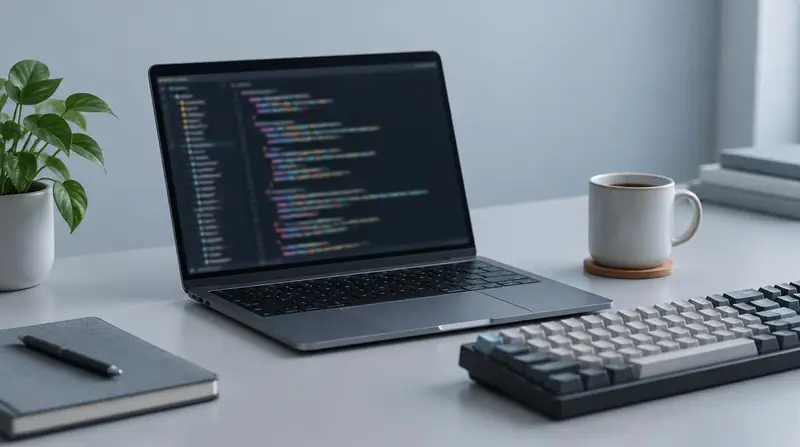
Development work is mostly memory-bound and I/O-bound. The machine that feels fastest is rarely the one with the most impressive graphics card.
Where the pressure actually falls
An IDE, a browser with many tabs, a database, a container runtime and a virtual machine can sit in memory simultaneously. 16 GB is the comfortable standard and 32 GB is justified for container-heavy or mobile development with emulators.
Compilation and dependency installation are storage-intensive, which makes an NVMe SSD a meaningful daily improvement.
Processor choice
Multiple cores help with builds and parallel test runs, but a recent mid-range processor with good sustained performance serves most developers better than an older high-tier chip.
The underrated parts
- Keyboard quality and key travel — you use it all day.
- A display with enough vertical space, or a plan for an external monitor.
- Port selection for docks, external drives and displays.
- Battery life if you work from cafés, campus or client sites.
Read next
Advice for your work or course
Joo Tech Finder is an educational initiative by Joo Computers Ltd. Browse all 61 guides.